Hazard classes: all 9 DOT classes explained
A plain-language hazardous materials classification chart covering all nine DOT hazard classes, their divisions, common examples, and placard appearance.
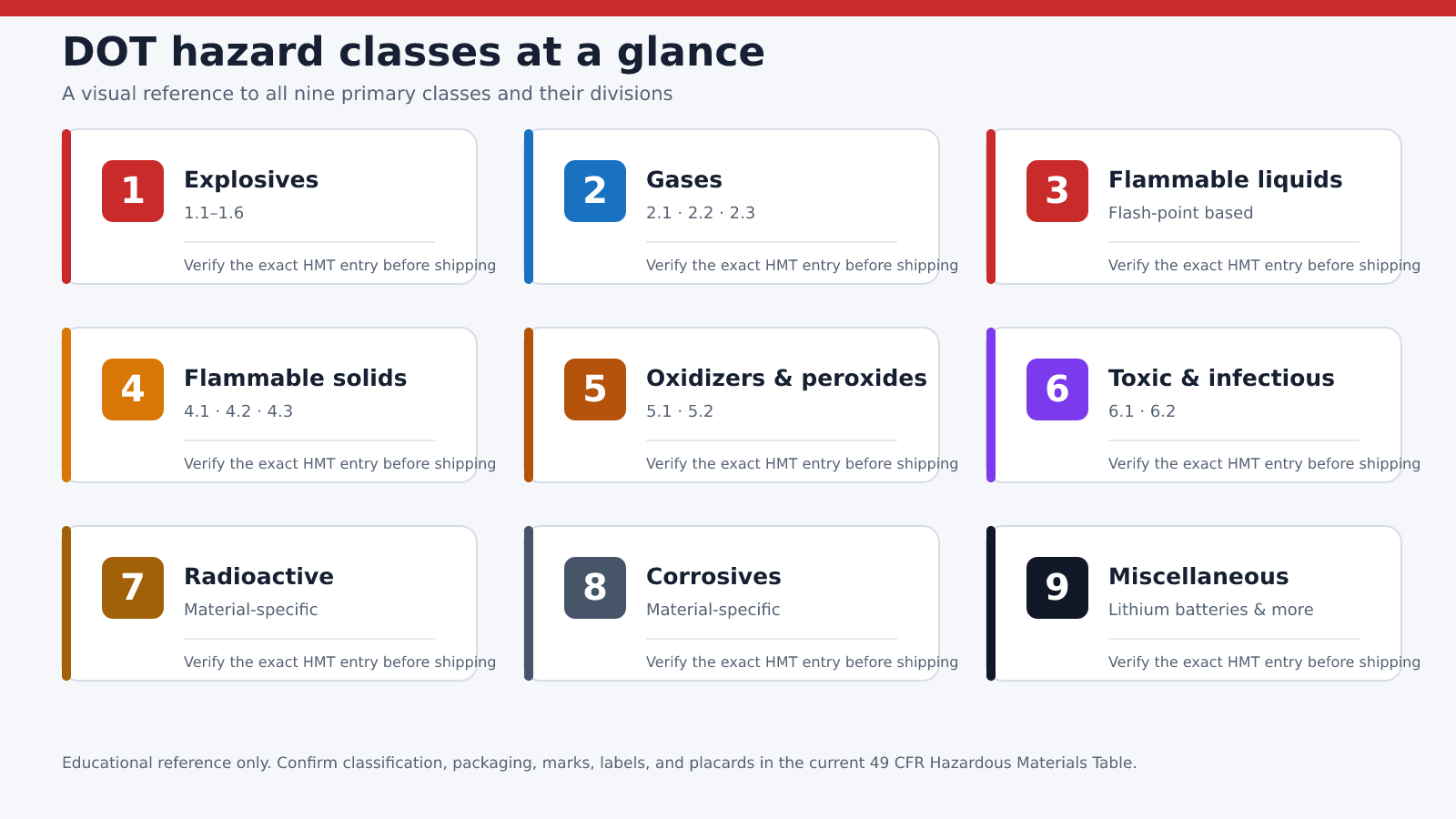
Text version of the hazard class chart
This table provides the full text equivalent for the chart above. It is a high-level reference only; verify the exact shipping entry in the current Hazardous Materials Table.
| Class | Name | Divisions | Plain-language scope |
|---|---|---|---|
| 1 | Explosives | 1.1–1.6 | Explosion hazards, from mass-explosion materials to extremely insensitive articles. |
| 2 | Gases | 2.1 · 2.2 · 2.3 | Flammable, non-flammable/non-toxic, and toxic gases. |
| 3 | Flammable liquids | — | Liquids that meet the applicable flammability criteria. |
| 4 | Flammable solids | 4.1 · 4.2 · 4.3 | Flammable solids, spontaneously combustible materials, and dangerous-when-wet materials. |
| 5 | Oxidizers & organic peroxides | 5.1 · 5.2 | Materials that can intensify combustion or react dangerously. |
| 6 | Toxic & infectious substances | 6.1 · 6.2 | Toxic substances and infectious substances. |
| 7 | Radioactive materials | — | Materials regulated for radioactive properties during transportation. |
| 8 | Corrosives | — | Materials that meet the applicable tissue-destruction or metal-corrosion criteria. |
| 9 | Miscellaneous | — | Transportation hazards not covered by another class, including some lithium batteries. |
The 9 DOT Hazard Classes
Hazard classes are the DOT's way of grouping materials by their primary transportation risk. A material's classification affects its proper shipping name, packaging, package labels, shipping paper description, placarding, segregation, and carrier acceptance. The table image above is a quick visual reference; the Hazardous Materials Table in 49 CFR §172.101 and the material's current classification record remain controlling.
Class 1: Explosives
Class 1 covers materials and articles with an explosion hazard. Its six divisions range from a mass-explosion hazard (1.1) to extremely insensitive articles (1.6). The placard is generally orange and shows the division number and, where required, compatibility group. Confirm the exact division and any permit requirements before tendering.
Class 2: Gases
Class 2 includes compressed, liquefied, refrigerated, or dissolved gases. The divisions are 2.1 flammable gas, 2.2 non-flammable/non-toxic gas, and 2.3 toxic gas. Placard colors commonly distinguish the division: red for 2.1, green for 2.2, and white with a skull-and-crossbones for 2.3.
Class 3: Flammable Liquids
Class 3 covers flammable liquids. In general, a liquid with a flash point at or below 60°C (140°F) can fall within this class. The placard is red. Common examples include certain paints, solvents, adhesives, and fuels. The assigned packing group matters for packaging and quantity exceptions.
Class 4: Flammable Solids
Class 4 materials can ignite through friction, heat, spontaneous chemical change, or contact with water. The divisions are 4.1 flammable solid, 4.2 spontaneously combustible, and 4.3 dangerous when wet. Division 4.3 materials require special attention because contact with water can create a dangerous reaction.
Class 5: Oxidizers and Organic Peroxides
Class 5 contains 5.1 oxidizers and 5.2 organic peroxides. These materials can intensify combustion or react dangerously with incompatible cargo. The placard is commonly yellow. Review the applicable segregation table and the material's safety information before co-loading with other regulated freight.
Class 6: Toxic and Infectious Substances
Class 6 contains 6.1 toxic substances and 6.2 infectious substances. A Division 6.1 entry may carry additional poison-inhalation-hazard requirements. These classifications need material-specific review because packaging, communication, and carrier acceptance rules vary.
Class 7: Radioactive Materials
Class 7 covers radioactive materials. Packages use radioactive labels based on the applicable category and transport index; placarding and routing requirements depend on the shipment. This class has specialized handling, training, and carrier requirements.
Class 8: Corrosives
Class 8 materials cause destruction of skin tissue or significantly corrode metal under the regulatory test conditions. The placard is black and white with liquid spilling from test tubes. Common examples include certain acids, bases, battery acid, and industrial cleaners. Compatibility and packaging must be evaluated for the exact formulation.
Class 9: Miscellaneous
Class 9 covers transportation hazards that do not fit another class. The placard has black vertical stripes across the upper half. Common examples include lithium batteries, dry ice, magnetized materials, and elevated-temperature materials. See the dedicated Class 9 hazmat guide for an overview of lithium battery and UN2990 considerations.
How to use this hazard class chart
Use the chart to identify the class family, not to make a final classification. Start with the current SDS and product classification, confirm the proper shipping name and UN/NA number in the Hazardous Materials Table, then check the entries for packaging, quantity exceptions, labels, placards, and special provisions. A product name alone is not enough to classify a shipment.
This guide is for educational purposes only. Always verify requirements against 49 CFR and consult your designated hazmat counsel before shipping.
Ready to ship?
Post a hazmat load and get matched with endorsed carriers in under 2 minutes.